
The 'Amazing' Limpet
The Common Limpet (patella vulgata) may be abundant on UK shorelines but it has characteristics that are most definitely not 'common'.
It has a home
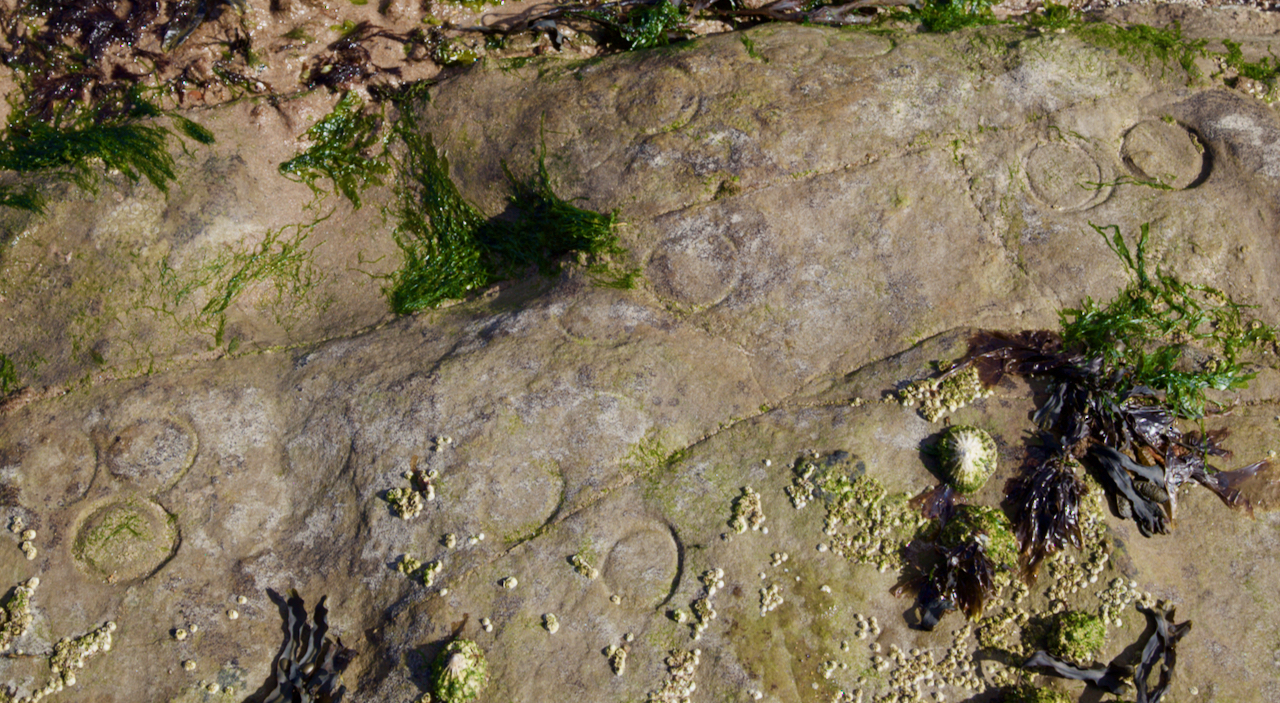
This is known as a 'scar'. You can see from the circular examples in the photograph why it gets that name. OK, the local mollusc estate agents aren't falling over themselves to sell it but it is a life saver for the limpet. At the end of a feeding meander across its local rock the limpet will return to the exact same spot just before the tide recedes. It then gives a little swivel while clamping on with its muscular foot. As a limpet can live for more than 15 years this action slowly but surely produces the scar. Settling into this purpose-made depression means it can form a strong seal, better retain life-giving seawater and make removal more difficult for shore birds and inquisitive kids hacking away with a plastic spade.
It tattoos rocks
Limpets feed on the microscopic algae that grows on its rock. They do this using their tongue, known as a radula. This is not a normal tongue and they don't give the rock a gentle lick. The radula is covered in tiny teeth which are formed from the hardest biological material yet discovered. As the limpet rasps and grinds the algae off the surface it forms a telltale zigzag trail which is like a drunkenly drawn tattoo.
It is male, female and neuter
If you think growing up as a human is tricky then take some solace from the limpet. When they first land on their rock as a juvenile they are only 0.2mm in size and have no designated sex. By the time of their second birthday they will have become sexually mature males and in another one to two years most will have switched to become female. Quite a lot to deal with while being battered by waves and attacked by hungry Oyster Catchers.
Perhaps with so many unusual features this misnamed mollusc should be known as the 'Amazing Limpet'.